Reviewing the No Selfies in the Bathroom SVG for Embroidery
As a designer who spends half my life staring at digitized files and the other half watching needles punch through fabric, I have developed a keen eye for what translates well from screen to stitch. Recently, I came across No Selfies in the Bathroom, Bathroom SVG, a design categorized under Crafts and Graphics that promises humor and style. While the product description highlights its use for wall decals and signs, my immediate instinct was to evaluate its potential as a machine embroidery design for tangible, handmade products. The question is not just whether it looks good on a monitor, but whether it holds up under the tension of a hoop and the texture of thread.
First Impressions: Mood and Visual Personality
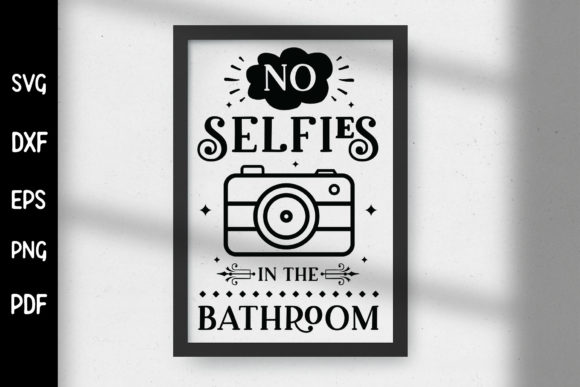
The first thing that strikes you about this design is its playful yet authoritative tone. It captures a modern social phenomenon with a wink, making it instantly relatable. Visually, the layout appears clean, relying on strong typography rather than complex illustrative elements. For an embroidery project, this is often a double-edged sword. Text-based designs require precise digitizing to ensure legibility, especially when scaled down. The "beautiful quote creative theme" mentioned in the description suggests an aesthetic that balances fun with elegance, which is crucial if you want to sell this as a premium handmade product rather than a novelty gag gift.
When I visualize this on a finished product, I see it working best where the message can be read quickly. It creates a mood of lighthearted boundary-setting. This personality fits perfectly into the current trend of humorous home decor and personalized apparel that sparks conversation. However, the success of this mood relies entirely on execution. A poorly stitched text design can look messy and amateurish, undermining the witty charm of the quote.
Real-World Application: From Digital File to Stitched Reality
To truly test the viability of No Selfies in the Bathroom, Bathroom SVG, I imagined a specific real-life scenario: creating a custom embroidered tote bag for a boutique client who specializes in quirky home accessories. Tote bags are forgiving canvases, but they also demand durability. If I were using this as a digital embroidery file for such a project, I would need to consider how the design interacts with the fabric texture. Canvas or heavy cotton provides a stable base, allowing the stitches to sit flat and crisp.
Beyond tote bags, this design has significant potential for custom apparel. Imagine it stitched onto the lower back of a sweatshirt or the chest pocket area of a button-down shirt. In these contexts, the design serves as a subtle icebreaker. For Etsy sellers and small shop owners, this versatility is key. You are not limited to one product type. You could apply it to aprons for a kitchen-themed collection, pillow covers for a guest bathroom refresh, or even tea towels as a humorous holiday gift. The key is matching the scale of the design to the item. A large hoop size might be necessary for a blanket or wall hanging, while a smaller hoop would suit a baby item or a cap, provided the details remain clear.
Navigating Technical Challenges in Embroidery
While the concept is strong, practical application requires caution. Text-heavy designs like this one are sensitive to stitch density. If the digitizer has packed too many satin stitch or fill stitch elements into a small area, the fabric may pucker, especially on thinner materials. When working with stretchy fabrics like t-shirts or baby clothes, using the correct stabilizer is non-negotiable. A cut-away stabilizer might be overkill for a lightweight tee, but a tear-away could leave residue or fail to support the weight of the thread.
Another critical consideration is the size of the lettering. If you attempt to shrink No Selfies in the Bathroom, Bathroom SVG for a small embroidered patch or a baby onesie, the tiny serifs or intricate curves of the font may become indistinguishable blobs of thread. I always advise testing the design on scrap fabric first. Run it in black and white mockups to check contrast and clarity before committing to expensive thread colors. Dark fabrics pose another challenge; if the design relies on fine lines, ensure your thread colors offer enough contrast to maintain readability. On curved surfaces like caps, the distortion can warp text, so careful hooping and possibly resizing are essential to keep the message straight and professional.
Enhancing Brand Value and Customer Trust
For commercial embroidery projects and craft business owners, the quality of the final stitch directly impacts brand consistency. A clean, well-executed version of this design signals professionalism. It tells the buyer that you care about the details. When customers receive a personalized gift that is both funny and beautifully crafted, their trust in your brand grows. This design can enhance buyer engagement because it is shareable. People love posting photos of unique, humorous items on social media, which serves as free marketing for your small shop product.
However, recognition and professionalism depend on avoiding common pitfalls. Do not rush the production. Check the stitch path to minimize jumps and trims, which can create loose threads that detract from the polished look. Whether you are creating printable mockups for your online store or actual physical inventory, the visual appeal must be consistent. A high-quality digital embroidery file should translate seamlessly into a high-quality finished product. If the design feels cluttered or dense, it may not convey the intended humor effectively, instead looking like a mistake.
Practical Notes for Designers and Makers
Before you load this into your machine, take a moment to review the technical specifics. Since the product description does not provide exact stitch counts or compatible file formats, you must verify these details with the seller. Ensure the file format matches your embroidery machine’s requirements. Check the recommended hoop size to avoid unnecessary re-digitizing. If you plan to use this for commercial purposes, confirm the licensing terms. Some graphics are for personal use only, while others allow for unlimited sales of finished items. Never assume; always read the license.
Test the design on various fabric textures. See how it behaves on a thick towel versus a smooth silk blend. Adjust your tension and speed accordingly. Use appropriate thread colors that complement the background fabric without blending in too much. Remember, the goal is clarity and charm. By treating No Selfies in the Bathroom, Bathroom SVG with the same rigor you would apply to any high-end applique design or complex motif, you ensure that your final creation is not just a product, but a piece of art that resonates with your audience. Whether for holiday embroidery, wedding gifts, or everyday boutique branding, thoughtful execution turns a simple graphic into a standout seller.