Reviewing the Best Mama Ever SVG Design for Embroidery
As a designer who spends half my life digitizing files and the other half stitching them out, I have learned to look past the glossy mockups. When I first pulled up the Best Mama Ever SVG DESIGN, my initial reaction was one of cautious optimism. The layout is clean, the typography is bold, and the sentiment is timeless. But in the world of Crafts and professional Graphics, a pretty picture on a screen does not always translate to a durable, high-quality finished product. I needed to know if this digital embroidery file could hold its own on actual fabric, under the needle of a machine, and in the hands of a discerning customer.
First Impressions and Visual Personality
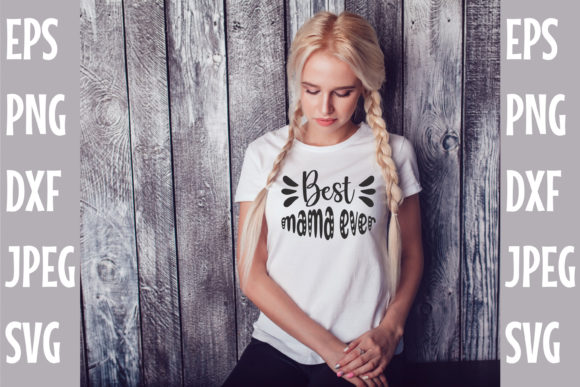
The design exudes a warm, celebratory mood that fits perfectly into the Mother’s Day category. It is not overly ornate, which is often a blessing for embroidery. Complex, swirling scripts can be a nightmare to stitch cleanly, especially at smaller sizes. This design, however, relies on strong, legible lettering with balanced spacing. For an embroidery project, this structural integrity is crucial. It suggests that the stitch density will be manageable, avoiding the puckering issues that plague poorly planned machine embroidery design files. The visual personality is modern yet classic, making it versatile enough for a young mom’s trendy tote or a grandmother’s traditional apron.
Real-World Application: The Tote Bag Test
To truly evaluate the Best Mama Ever SVG DESIGN, I imagined a specific real-life scenario: a custom order for a local boutique selling eco-friendly goods. The client wanted a run of canvas tote bag design items for a spring market. Canvas is a sturdy fabric, but it has a distinct weave that can interfere with fine details. I visualized placing this design on the front panel, centered and prominent.
In this context, the design shines. Because it is described as compatible with cutting software like Cricut and Silhouette, it likely features clean vector paths. For embroidery, this translates well if the digitizer has respected those boundaries. I would approach this as a combination of satin stitch for the borders or key accents and a fill stitch for larger solid areas, ensuring the text remains raised and tactile. The result would be a handmade product that feels premium. Customers touching the bag would feel the texture of the thread, adding perceived value to the personalized gift.
Versatility Across Product Lines
Beyond totes, this embroidery file shows promise for various custom apparel items. Consider sweatshirt embroidery. A crewneck sweatshirt provides a stable, thick surface that handles higher stitch counts well. Placing the design on the left chest creates a subtle, branded look, while a larger placement on the back makes a bold statement. For baby embroidery, such as onesies or burp cloths, the scale becomes critical. If the design includes tiny elements, they may get lost or become scratchy against sensitive skin. In such cases, simplifying the stitch pattern or using an applique design technique—where fabric patches are stitched down—could be a smarter choice to reduce bulk and increase comfort.
For Etsy seller audiences, versatility is key to profitability. This design could easily be adapted for holiday embroidery projects, not just for Mother’s Day but potentially for birthdays or appreciation gifts year-round. It also works well for embroidered patch creation. By stitching the design onto a stiff stabilizer-backed fabric and cutting it out, you create a versatile accessory that can be ironed or sewn onto jackets, hats, or bags later. This expands the utility of the design assets significantly.
Navigating Technical Challenges
While the design is strong, there are areas where caution is necessary. Any commercial embroidery project involving curved surfaces, like caps or hats, requires careful hoop selection. A large, wide design might distort on a curved cap brim. I would recommend testing the design in a smaller hoop size first to ensure the proportions remain balanced without stretching the fabric unnaturally. Additionally, thread colors play a massive role in readability. On dark fabrics, light threads are essential for contrast. However, if the design has very thin lines, using too many color changes or complex running stitch outlines might lead to thread breaks or messy backs.
Textured fabrics present another challenge. If you are stitching this onto a fluffy towel or a ribbed knit, the underlying texture can obscure fine details. In these cases, increasing the stabilizer support is non-negotiable. A cut-away stabilizer might be better than a tear-away for garments that will undergo frequent washing, ensuring the stitch density holds the fabric together without pulling or distorting over time.
Practical Notes for the Craft Business Owner
Before listing this as a small shop product or using it in client work, there are several practical steps every designer should take. First, always test the design on scrap fabric that matches your final material. Check the tension and look for any gaps in the stitching. Second, review the license terms. Since this is an instant download cutting file, confirm whether it includes rights for commercial embroidery sales. Some licenses allow physical sales but restrict digital redistribution. Understanding this distinction protects your craft business from legal issues.
Third, consider how the design looks in black and white. If you plan to create printable mockup images for your online store, a high-contrast version helps customers visualize the shape clearly. Finally, think about your target audience. For men, women, kids, and babies, the scale and placement must vary. A design that looks perfect on an adult XL t-shirt might overwhelm a baby’s onesie. Adjusting the size and perhaps simplifying the stitch path for smaller hoops ensures consistency in quality across your product line.
In conclusion, the Best Mama Ever SVG DESIGN offers a solid foundation for a variety of embroidery project types. Its strength lies in its clarity and emotional resonance. With proper attention to fabric texture, hoop size, and stitch technique, it can elevate a simple item into a cherished keepsake. For the serious maker or creative entrepreneur, it is a reliable asset that, when handled with professional care, delivers both aesthetic appeal and commercial viability.