Reviewing Peace out Seventh Grade Svg for Embroidery
As a designer who has spent years translating digital vectors into thread, I approach every new machine embroidery design with a mix of excitement and skepticism. We have all been there: you download a file that looks crisp on the screen, only to watch it pucker or lose definition once the needle hits the fabric. Recently, I evaluated Peace out Seventh Grade Svg to determine if it holds up under the scrutiny of real-world production. This is not just about whether the file opens correctly; it is about whether it creates a finished product that customers will love and wear with pride.
First Impressions and Visual Personality
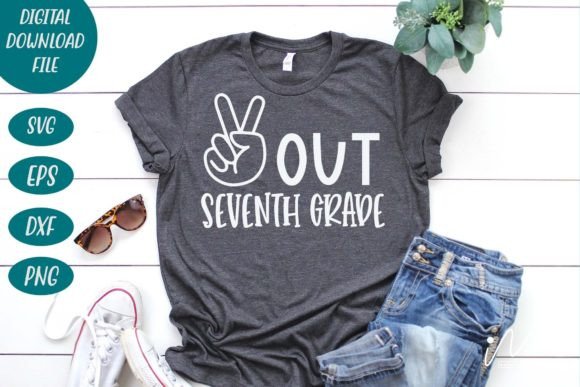
The phrase “peace out seventh grade” carries a specific cultural weight. It marks a transition, a milestone, and a bit of teenage attitude. Visually, the design relies heavily on typography. In the world of Crafts and Graphics, text-based designs are deceptively simple. They require perfect spacing and legibility. My first impression of this digital embroidery file was that it captures a casual, celebratory mood. It feels appropriate for end-of-year gifts, school memorabilia, or personalized keepsakes.
However, as an experienced reviewer, I look past the sentiment to the structure. The layout appears balanced, but the success of this design in embroidery depends entirely on how those letters translate to stitch. Thin serifs or overly intricate connections can vanish in thick thread. If you are planning to use this for a sweatshirt embroidery project, the boldness of the font is a plus. It suggests durability and visibility, which are key for apparel that will be worn repeatedly.
Real-World Application: The Tote Bag Test
To truly understand the value of Peace out Seventh Grade Svg, I imagined a specific scenario: a custom order for a parent wanting a tote bag design for their child’s last day of middle school. This is a common request for Etsy sellers and small shop product creators. The bag is canvas, sturdy and textured. Here, the design needs to stand out against a busy background.
In this context, the design performs well because of its clear message. When stitched onto canvas with a high-contrast thread colors scheme—perhaps white thread on navy blue—the letters pop. The simplicity of the quote allows the stitching to breathe. For a handmade product like this, clarity is king. Customers do not want to squint to read the sentiment. This design offers that immediate readability, which boosts the perceived value of the personalized gift.
Navigating Fabric and Stitch Challenges
While the design shows promise, there are areas where caution is necessary. Embroidery is physical; it interacts with fabric texture in ways digital previews cannot always predict. If you are using this on a stretchy material, such as a jersey t-shirt for custom apparel, you must prioritize stabilization. Without proper support, the text may distort, turning straight lines into waves.
Another critical consideration is stitch density. Although the provided description notes that you receive SVG, DXF, and EPS formats, it does not specify an automatic digitized embroidery file with pre-set stitch counts. This is a crucial distinction for embroidery designers. You will likely need to digitize this vector yourself or use software to convert it. During this process, you must decide between satin stitch for smaller letters and fill stitch for larger ones. Satin stitches provide a smooth, glossy finish but can snag if too wide. Fill stitches are durable but can feel stiff on lightweight fabrics.
For baby embroidery or delicate items, I would advise against using dense fill stitches for the entire text. Instead, consider a running stitch outline or a lighter density to keep the garment soft. Always test the design on scrap fabric first. Check how the corners of letters like "P" or "G" hold up. Sharp corners in vectors often become rounded blobs in thread if the digitizing is not precise.
Commercial Viability for Craft Businesses
For craft business owners and creative entrepreneurs, the versatility of Peace out Seventh Grade Svg is its strongest asset. It fits neatly into the niche of milestone gifts. Beyond tote bags, consider using it for:
- Embroidered patch creations for jackets or backpacks.
- Holiday embroidery gifts for graduating students.
- Decorative accents on pillow covers for teen bedrooms.
- Custom aprons for school staff or volunteers.
The ability to change color and size with appropriate software means you can adapt the design for different hoop size constraints. A smaller version might work nicely on a cap brim, while a larger version could dominate the back of a hoodie. However, remember that scaling up increases stitch count and production time. For commercial embroidery projects, efficiency matters. Ensure that the scaled version does not become so dense that it damages the fabric or takes hours to stitch.
Designer Notes for Best Results
Before you list this as a design assets offering or use it in client work, follow these practical steps:
- Verify Licensing: The product description mentions file formats but does not explicitly state commercial use rights for the final stitched item. Always confirm licensing terms before selling finished product items.
- Digitize Carefully: Since you are receiving vector graphics (SVG, DXF, EPS), you are responsible for the digitization process. Pay attention to underlay stitches to prevent shifting.
- Test Contrast: Use black and white mockups to ensure the design remains legible without color reliance. This helps when choosing thread colors for dark fabrics.
- Check Small Details: If the design includes any decorative elements beyond the text, ensure they are large enough to stitch cleanly. Tiny details often get lost in production.
- Stabilizer Selection: Match your stabilizer to your fabric. Cut-away stabilizer is usually best for stretchy knits, while tear-away works for stable wovens like cotton tote bags.
Final Verdict
Peace out Seventh Grade Svg is a solid choice for designers looking to create meaningful, milestone-based products. Its strength lies in its clear messaging and adaptable layout. However, its success depends entirely on the skill of the digitizer and the preparer. It is not a plug-and-play embroidery file but rather a versatile graphic resource that requires technical expertise to translate into thread. For handmade shop owners willing to put in the digitizing work, it offers a reliable foundation for popular, sellable items. Just remember to respect the limitations of thread and fabric, and always prioritize a test stitch before committing to a full production run.