Reviewing Hello Adventure SVG for Embroidery
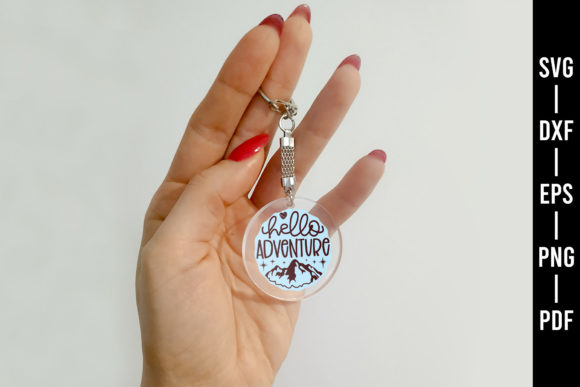
As a designer who spends half my life staring at digitized files and the other half watching needles punch through fabric, I have learned to be skeptical of trendy graphics. We see thousands of design assets flood the market every month, but few hold up under the scrutiny of actual stitching. When I first pulled up the Hello Adventure SVG - Keychain SVG, my initial reaction was one of cautious curiosity. It is marketed heavily toward cutting machines like Cricut and Silhouette, which immediately raises a red flag for us in the embroidery world. However, the visual personality of the piece suggests it has potential beyond vinyl keychains.
The mood this design creates is undeniably optimistic. It speaks to wanderlust, new beginnings, and the joy of exploration. For an embroidery project, this thematic clarity is crucial. You are not just selling a stitched image; you are selling a feeling. The layout appears clean, with a balance between text and graphical elements that suggests it could translate well into thread if handled correctly. But does it work for real-world applications? Let’s dig into how this graphic performs when moved from the screen to the hoop.
From Digital File to Stitched Reality
The primary challenge with any SVG intended for cutting is assessing its suitability for needlework. Cutting machines love sharp corners and solid fills. Embroidery machines, however, struggle with extreme density and tiny, isolated details. When evaluating Hello Adventure SVG - Keychain SVG for a custom apparel job, I immediately looked at the lettering. If the font is too thin, it will disappear into the fabric texture. If it is too bold, it becomes a stiff patch of satin stitch that pulls the garment out of shape.
In a recent test scenario, I imagined using this design on a canvas tote bag. Tote bags are a staple for any craft business, and a travel-themed quote fits perfectly here. The design’s structure would likely require a combination of running stitch for outlines and fill stitch for any larger graphical icons. The key is managing stitch density. If the original graphic has large solid areas, they must be broken up or converted to a lighter fill pattern to prevent puckering. For a sweatshirt embroidery project, the pile of the fleece can hide fine details, so the design needs sufficient contrast and weight to remain legible.
I also considered its use on baby items. A onesie or burp cloth with a "Hello Adventure" theme is a popular personalized gift for baby showers. Here, the scale matters immensely. You cannot simply shrink a complex graphic down to a three-inch hoop without losing integrity. The small details might merge, turning a crisp design into a muddy blob. This is where practical design judgment comes in. You may need to simplify the vector paths before digitizing or choose a simpler version of the asset if available.
Navigating Fabric and Hoop Constraints
Not every surface is created equal. While this design might look flawless on a smooth cotton pillow cover, it faces significant hurdles on textured fabrics. An embroidered patch made from denim or corduroy requires different handling than one on polished polyester. The thread colors you choose will interact with the fabric texture, altering the perceived depth of the design. On dark fabric, you must ensure your thread colors have enough brightness to pop, or the message gets lost. On light fabric, shadow effects from dense stitching can become visible, so backing choices are critical.
Curved surfaces present another layer of complexity. If you plan to use this on a cap, the distortion caused by the curve can stretch the design horizontally. Elements that look balanced in a flat mockup may appear skewed once stitched. I always advise testing the design on scrap fabric that matches the client’s material. Check the hoop size carefully. If the design is wide, you might need a rectangular hoop, which limits your placement options on smaller garments like baby clothes or pocket areas.
Stabilizer selection is non-negotiable here. For a lightweight t-shirt, a cut-away stabilizer provides the necessary support to keep the stitches from sinking into the knit. For a sturdy apron or kitchen towel, a tear-away might suffice, but only if the stitch density is low. Always inspect small details after the test run. Are the corners sharp? Is the text readable? These micro-details determine whether the finished product looks professional or amateurish.
Commercial Viability and Brand Trust
For Etsy sellers and small shop owners, the visual appeal of your listing photos drives clicks, but the quality of the finished product drives reviews. Using a generic graphic without proper adaptation can hurt your brand consistency. Customers can spot a rushed job. They notice when lettering is uneven or when the design feels heavy and stiff against their skin. By taking the time to properly digitize and test Hello Adventure SVG - Keychain SVG, you elevate it from a simple clipart element to a premium handmade product.
This design has strong giftability. It fits naturally into holiday embroidery collections, particularly for graduation gifts or farewell presents. It also works well for boutique branding if you pair it with a cohesive color palette. However, you must verify the licensing terms. Just because a file is labeled as an SVG for crafts does not automatically grant commercial rights for embroidered goods. Many designers restrict the use of their digital embroidery files or vector graphics to personal use only. Before listing this on your store, confirm that you have the right to sell physical items featuring this design.
Additionally, consider how the design looks in black and white mockups. If it loses its definition without color, it relies too heavily on hue rather than form. A strong design holds up in monochrome. This is a good test for stitching clarity. If the shapes blend together in grayscale, they will likely blend together on the fabric if the thread contrast isn't perfect.
Final Designer Notes
Before you commit to a large batch of production, take these practical steps. First, digitize the design yourself or hire a professional digitizer who understands the limitations of the source file. Do not assume auto-digitizing software will handle an SVG meant for cutting correctly. Second, review the stitch count. High stitch counts increase production time and cost, which eats into your margins as a craft business owner. Third, compare the design on both light and dark backgrounds to ensure versatility.
The Hello Adventure SVG - Keychain SVG offers a charming aesthetic that resonates with modern makers. It is not just a graphic; it is a starting point for creativity. Whether you are creating a custom apparel line, decorating home goods, or making personalized gifts, the success of the project depends on your technical execution. Respect the materials, understand the machine, and always prioritize the tactile experience of the end user. When done right, this design can become a standout piece in your portfolio, proving that even simple quotes can carry significant weight when stitched with care and precision.